1. General Introduction of Magnesium Hydroxide
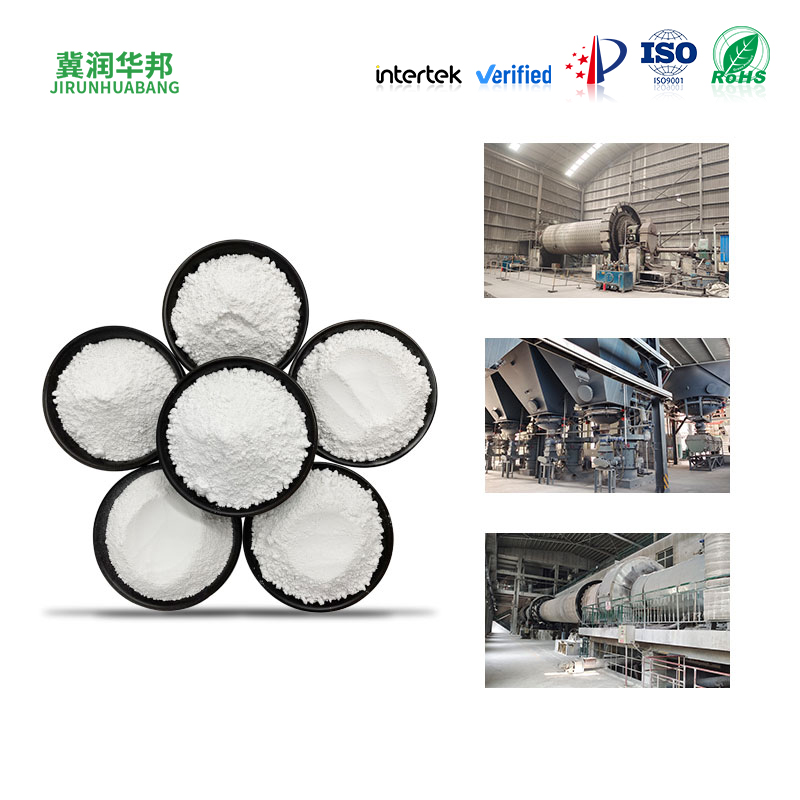
Magnesium hydroxide (Mg(OH)₂), commonly known as brucite powder, is a white, odorless, non-toxic inorganic mineral powder. It can be produced from natural brucite ore grinding and purification or through advanced chemical synthesis technology. In recent years, with the global ban and restriction on traditional halogen flame retardants, industries including wire and cable, new energy, construction materials, and rubber plastics have accelerated the upgrade of halogen-free and low-smoke flame retardant systems. As a classic environmentally friendly inorganic flame retardant and functional filler, magnesium hydroxide has gradually become the mainstream material for high-standard flame retardant modification due to its unique physical and chemical stability, zero-halogen property, excellent smoke suppression performance and safe combustion characteristics.
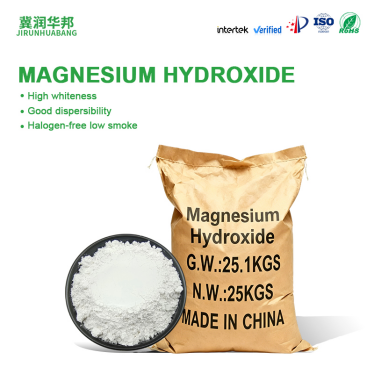
Different from conventional flame retardants that rely on chemical halogen reaction to achieve fire resistance, magnesium hydroxide completely depends on physical endothermic decomposition and barrier protection. It does not produce any toxic gas, corrosive gas or dense smoke during combustion, which fully conforms to global environmental protection trends and international standards such as RoHS, REACH and CE. It is widely recognized as one of the safest and most reliable flame retardant fillers in the modern material industry.
2. Professional Flame Retardant Working Principle
The flame retardant mechanism of magnesium hydroxide is a complete three-dimensional protection system including cooling, oxygen isolation and protective layer coverage. The powder remains stable under normal processing temperature. When the ambient temperature rises above 340℃, magnesium hydroxide begins to decompose thermally and release crystal water.
During the decomposition process, the material absorbs a large amount of heat energy from the combustion surface, which effectively reduces the temperature of the polymer substrate and inhibits thermal cracking and continuous combustion of the material. At the same time, a large amount of water vapor released dilutes the concentration of flammable gas and oxygen around the flame, slowing down the burning speed. After decomposition, the generated magnesium oxide forms a dense, compact and high-temperature resistant inorganic protective film on the surface of the product. This stable protective layer can completely cover the combustible substrate, prevent heat transfer, block volatile gas overflow, and finally achieve the effect of self-extinguishing and flame retardant.
3. Core Product Advantages
3.1 Zero-halogen, Non-toxic and Environmentally Friendly
Magnesium hydroxide contains no halogen, heavy metals or harmful chemical components. The combustion products are only water and magnesium oxide, which are harmless to human body and the environment. It solves the fatal defects of traditional halogen flame retardants such as toxic smoke release and equipment corrosion, and is very suitable for high-standard public facilities, household materials and export-grade products.
3.2 Excellent Low-smoke and Smoke-suppression Performance
In fire accidents, dense smoke and toxic gas are the main causes of casualty. Magnesium hydroxide has outstanding smoke suppression ability, which can greatly reduce smoke generation during polymer combustion, improve fire escape visibility, and effectively reduce secondary smoke hazards. It is an essential material for high-grade fire safety products.
3.3 High Thermal Stability for High-temperature Processing
Compared with aluminum hydroxide (decomposition temperature 220℃), magnesium hydroxide has a higher decomposition temperature of 340℃–350℃. It can adapt to the high-temperature extrusion, granulation and molding processes of PP, PE, EVA and various engineering plastics. No premature decomposition, bubbling or material deformation occurs during production, ensuring stable processing quality and high finished product yield.
3.4 Dual Functions of Flame Retardancy and Filling Reinforcement
While providing flame retardant performance, magnesium hydroxide can also serve as a functional reinforcing filler. It can significantly improve the rigidity, hardness, wear resistance and dimensional stability of plastic and rubber products, reduce product shrinkage, and replace part of high-cost resin materials, helping manufacturers reduce overall production costs.
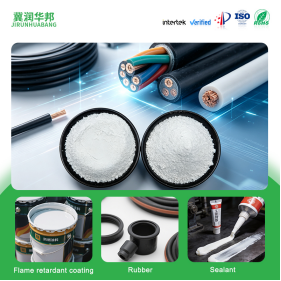
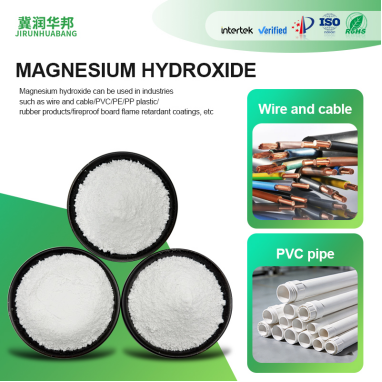
Magnesium hydroxide is widely used in low-smoke halogen-free cable materials, photovoltaic wires, automobile flame-retardant parts, building flame-retardant plates, flame-retardant pipes, rubber sealing products, fireproof coatings and other fields. In addition, high-purity magnesium hydroxide is also commonly used in industrial wastewater neutralization, heavy metal adsorption and flue
 Hot News
2026-03-17
2025-12-08
2025-12-06
2025-12-02

Runhuabang supplies non-metallic minerals, including iron oxide pigments, silica powder, kaolin, diatomite and zeolite and so on, with custom solutions worldwide.
H2-811, Poly International Building, Shifang Road, Chang'an District, Shijiazhuang, Hebei Province
Copyright © Hebei Runhuabang New Material Technology Co., Ltd All Rights Reserved Privacy Policy
 EN
EN